

Det ser ud til, at din indkøbskurv i øjeblikket er tom
Biotin Benefits for Joints: Relief and Mobility Support
Persistent joint pain can make daily movement feel like a challenge, especially as you reach your thirties and start noticing changes in flexibility. This is when supporting your body with nutrients like biotin becomes more than just a wellness trend. Biotin, also known as vitamin B7, is a vital piece for maintaining your metabolic and cellular health, which indirectly keeps your joints strong and mobile. By understanding biotin’s unique role, you gain insight into how natural support can promote lasting comfort and mobility.
Table of Contents
- Defining Biotin: Role In Joint Health
- How Biotin Impacts Cartilage And Mobility
- Optimal Biotin Sources And Dosage Strategies
- Risks, Side Effects, And Safe Use
- Comparing Biotin With Other Joint Supplements
Key Takeaways
| Point | Details |
|---|---|
| Biotin’s Role in Metabolism | Biotin is essential for energy production and cellular maintenance, aiding in the metabolism of nutrients necessary for joint health. |
| Importance for Joint Health | Adequate biotin levels support the repair of cartilage and connective tissue, crucial for maintaining joint mobility and function. |
| Dietary Sources | Biotin can be obtained from everyday foods like liver, egg yolks, and nuts, making it easier to meet daily requirements through diet. |
| Cautions with Supplementation | High-dose biotin can interfere with lab tests; consult with a healthcare provider if you are on medications or need regular blood work. |
Defining Biotin: Role in Joint Health
Biotin, also known as vitamin B7, is a water-soluble vitamin your body needs for basic metabolic functions. Think of it as a critical puzzle piece that keeps your cellular machinery running smoothly.
What Biotin Actually Does
Biotin works as a cofactor for enzymes involved in energy production. Your body uses it to break down fatty acids, glucose, and amino acids—the building blocks your cells need to function. Beyond energy metabolism, biotin plays roles in gene regulation and cell signaling, which directly affects how your tissues repair and maintain themselves.
The Connection to Joint Health
Your joints contain connective tissue made largely of collagen and cartilage. These structures depend on proper amino acid metabolism and cellular health to stay strong and flexible. When biotin levels are adequate, your body can efficiently rebuild and maintain connective tissues, which supports joint function and mobility.
Here’s what biotin does for joint support:
- Supports amino acid metabolism needed for cartilage and connective tissue repair
- Maintains cellular energy production for tissue maintenance
- Promotes gene regulation that influences structural protein synthesis
- Helps your body absorb and use nutrients more efficiently
How Your Body Uses Biotin
When you consume biotin through food or supplements, most absorption occurs in your small intestine, and your liver stores the majority. This stored reserve allows your body to access biotin when needed for metabolic processes and tissue repair.
Biotin’s role in maintaining “normal physiological functions” extends beyond simple metabolism—it supports the cellular infrastructure that keeps your joints mobile and pain-free.
Why This Matters for You
After 30, maintaining adequate biotin becomes increasingly relevant. Your joints experience more wear from decades of movement, and efficient tissue repair becomes more challenging. Proper biotin levels ensure your body can repair daily joint stress.
Pro tip: Pair biotin supplementation with consistent movement and adequate protein intake—biotin helps your body use amino acids for tissue repair, but only when those building blocks are available through your diet.
How Biotin Impacts Cartilage and Mobility
Cartilage is the cushioning material between your bones that absorbs shock and enables smooth joint movement. When cartilage deteriorates, mobility decreases and pain increases.
Biotin supports the metabolic processes your body uses to maintain and repair cartilage tissue. Your cartilage contains collagen and proteoglycans—structural proteins that require proper amino acid metabolism to rebuild and stay resilient.

The Cartilage-Biotin Connection
Cartilage doesn’t have blood vessels, so it relies on metabolic efficiency to stay healthy. Biotin, as an enzyme cofactor, ensures your cells produce energy efficiently for the continuous repair work cartilage requires.
When biotin levels are adequate, your body can:
- Synthesize amino acids needed for collagen and protein formation
- Generate cellular energy for tissue maintenance and repair
- Support gene regulation that controls structural protein production
- Optimize nutrient absorption for joint health
How This Translates to Better Mobility
Research shows that cartilage regeneration benefits from nutrient support, particularly nutrients that enhance metabolic pathways. Biotin’s role in these pathways directly influences how effectively your cartilage repairs itself.
When cartilage maintains its structural integrity, you experience less stiffness and greater joint flexibility. This means moving more comfortably and without the protective limping that leads to secondary pain elsewhere.
Healthy cartilage requires constant cellular maintenance—biotin ensures your cells have the metabolic tools to manage this demand.
Real-World Impact After 30
In your thirties and beyond, cartilage repair slows naturally. Biotin becomes increasingly valuable because it helps your body work more efficiently with the repair capacity you have.
Mobility improvements typically follow a pattern: reduced joint stiffness appears first, followed by decreased pain during movement, then improved range of motion. This progression reflects your cartilage gradually strengthening as your body repairs accumulated damage.
Proper cartilage tissue healing maintains long-term joint function, which directly preserves your ability to move freely as you age.
Pro tip: Support cartilage repair by combining biotin with consistent, low-impact movement like walking or swimming—movement stimulates cartilage maintenance while biotin ensures your cells have the metabolic capacity to respond.
Optimal Biotin Sources and Dosage Strategies
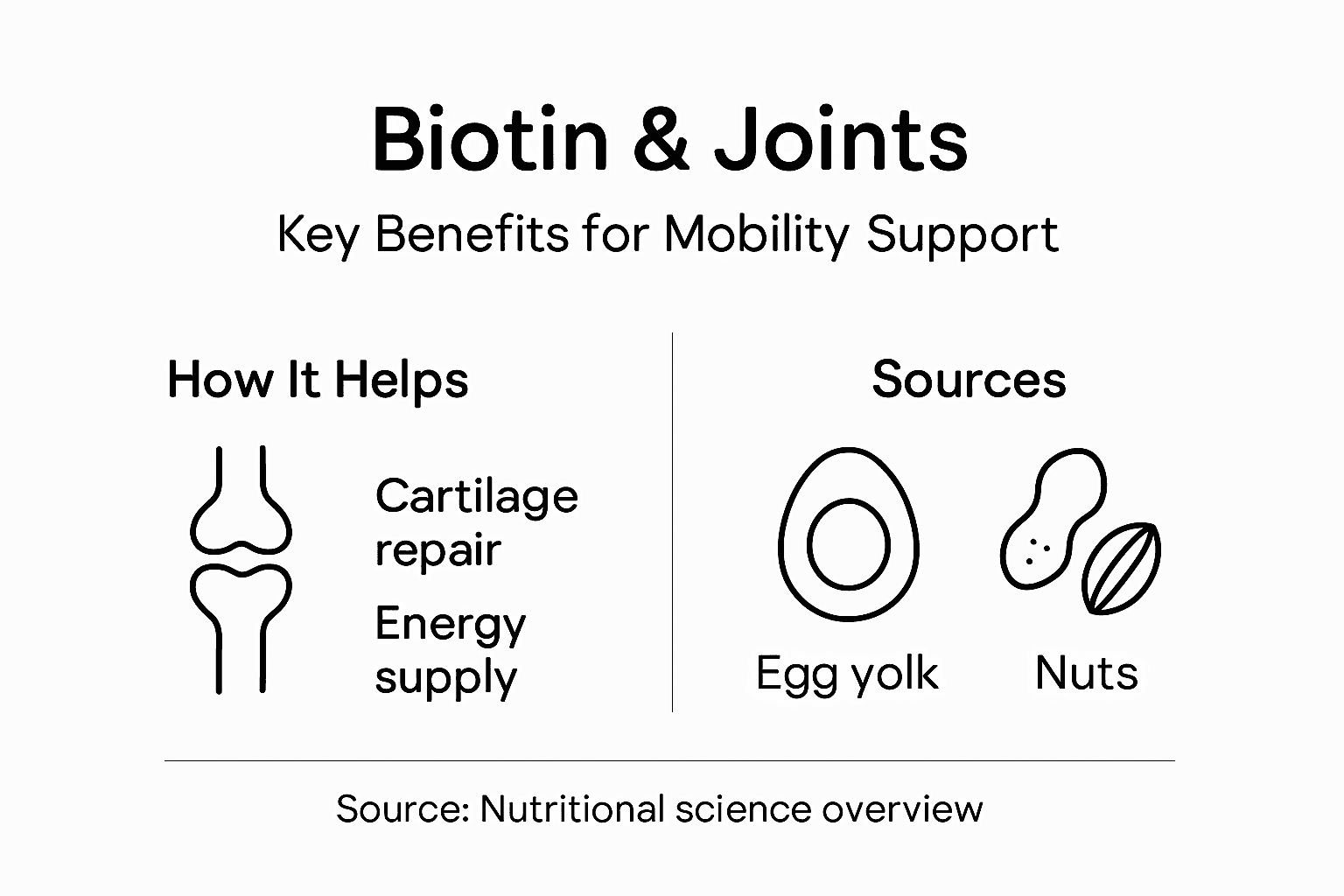
Most adults need about 30 micrograms of biotin daily, a target you can reach through food alone. Getting biotin from real sources is straightforward and often overlooked when people jump straight to supplements.
Food Sources: Your First Choice
Biotin appears naturally in many everyday foods you likely already eat. The richest sources include liver, egg yolks, nuts, seeds, salmon, and certain vegetables.
Top biotin-rich foods:
- Liver (beef or chicken): highest concentration
- Egg yolks: significant amounts per serving
- Almonds, walnuts, and other nuts: convenient snack option
- Salmon and fatty fish: dual benefits for joint health
- Sweet potatoes and spinach: vegetable sources
- Mushrooms: especially varieties like cremini and portobello
One important note: cooking reduces biotin content in food, so raw or lightly cooked options preserve more of the vitamin.
The following table summarizes key sources of biotin and their typical daily contribution:
| Food Source | Biotin Content (per avg. serving) | Additional Joint Benefit |
|---|---|---|
| Egg yolk | 10-25 micrograms | Provides protein |
| Beef liver | 30-35 micrograms | High in vitamin A and iron |
| Almonds | 1-2 micrograms | Contains healthy fats |
| Salmon | 5 micrograms | Omega-3s for inflammation |
| Sweet potato | 2-3 micrograms | Antioxidant nutrients |
When Supplements Make Sense
If your diet doesn’t consistently include biotin-rich foods, supplements fill the gap efficiently. Biotin supplements range from standard doses to higher levels depending on your specific goals and health situation.
Standard supplement dosages typically offer:
- 30-100 micrograms: matches daily adequacy
- 500-1,000 micrograms: moderate supplementation
- 2,500+ micrograms: higher pharmacological doses
Dosage Cautions Worth Knowing
High-dose biotin supplements can interfere with certain laboratory tests, particularly thyroid and cardiac markers. If you take regular blood work, mention biotin supplementation to your healthcare provider beforehand.
Biotin is water-soluble, meaning excess amounts don’t accumulate in your body—your system excretes what it doesn’t need. However, long-term safety data for very high doses remains limited.
Start with food sources first, then add supplements only if dietary intake proves inconsistent.
Finding Your Personal Strategy
Your optimal approach depends on your diet and goals. Someone eating eggs regularly and salmon weekly likely meets daily needs through food. Others benefit from a modest supplement to ensure consistency.
Consider your actual eating patterns before deciding. Track a typical week of meals and identify where biotin-rich foods appear naturally.
Pro tip: Keep hard-boiled eggs or almonds on hand as biotin-rich snacks—consistency matters more than megadoses, and whole foods provide additional joint-supporting nutrients like protein and omega-3 fatty acids.
Risks, Side Effects, and Safe Use
Biotin is one of the safer supplements available, with minimal risk when used appropriately. However, understanding potential downsides helps you use it responsibly and avoid unexpected complications.
The Safety Profile
Biotin is water-soluble, meaning your body doesn’t store excess amounts. Whatever your system doesn’t use gets excreted through urine, which significantly reduces toxicity risk compared to fat-soluble vitamins.
Biotin is generally safe at recommended doses, with side effects being uncommon. Most people tolerate standard supplementation without any issues whatsoever.
Actual Side Effects
When side effects do occur, they’re typically mild and temporary. Reported cases remain rare, even at higher doses.
Possible side effects include:
- Skin rash or minor allergic reactions
- Mild gastrointestinal discomfort
- Nausea or abdominal pain
- Cramping (uncommon)
These effects usually resolve once you stop taking the supplement or reduce your dose.
The Lab Test Problem
The most significant concern with biotin isn’t direct toxicity—it’s interference with laboratory tests. High-dose biotin supplements can skew results for thyroid function tests, cardiac markers, and other blood work.
This matters because inaccurate test results can lead to misdiagnosis. If your doctor relies on incorrect numbers, treatment decisions could go wrong.
Discontinue biotin supplements 72 hours before any lab testing to ensure accurate results.
Who Should Be Cautious
Certain people need extra care with biotin supplementation:
- People on regular medication regimens
- Those with frequent blood work or monitoring
- Individuals with existing thyroid conditions
- Anyone taking cardiac medications
- Pregnant or breastfeeding women (consult your provider)
If you fall into any of these categories, discuss biotin use with your healthcare provider beforehand.
Safe Use Guidelines
Stick to the standard 30-micrograms daily recommendation unless a healthcare provider advises otherwise. If you supplement, moderate doses (100-500 micrograms) pose minimal risk while still supporting joint health.
Inform your doctor about biotin use before any lab tests. This simple step prevents misunderstandings and ensures accurate medical decision-making.
Pro tip: Schedule your biotin supplementation to stop 72 hours before planned blood work—set a phone reminder so you don’t accidentally take it the morning of your appointment.
Comparing Biotin With Other Joint Supplements
The supplement market overflows with joint support options, each working through different mechanisms. Understanding how biotin compares helps you build an effective strategy rather than waste money on redundant products.
How Biotin Differs From Direct Joint Supplements
Biotin doesn’t directly target cartilage the way some supplements do. Instead, it works behind the scenes supporting the metabolic processes your body needs to repair and maintain joint tissue.
Joint supplements vary widely in their approaches, with each category addressing joint health differently. Biotin functions as a foundational nutrient enabling your body’s natural repair mechanisms.
Glucosamine and Chondroitin
These supplements directly supply cartilage-building materials. Glucosamine provides building blocks for cartilage structure, while chondroitin helps cartilage retain water and resist compression.
Biotin’s role differs: it ensures your cells have the metabolic energy to use these building blocks effectively. Without adequate biotin, your body struggles to synthesize the proteins glucosamine and chondroitin are supposed to support.
Collagen Peptides
Collagen peptides provide pre-broken-down collagen that your body can use directly for connective tissue repair. They’re structural materials—the actual physical components of cartilage and joint tissue.
Biotin works alongside collagen by supporting the amino acid metabolism needed to incorporate collagen into your tissues effectively. Think of collagen as the bricks and biotin as the mortar that helps them bond properly.
Anti-Inflammatory Supplements
Turmeric and omega-3 fatty acids reduce inflammation that causes joint pain and stiffness. They address the pain response rather than tissue repair directly.
Biotin isn’t anti-inflammatory but supports tissue repair efficiency. Combined, they address both inflammation (reducing pain) and tissue quality (improving mobility).
The Complementary Approach
Biotin works best as part of a comprehensive strategy, not as a standalone solution. Here’s how different supplements complement each other:
Here’s how biotin compares to other popular joint supplements:
| Supplement Type | Main Function | Unique Advantage | Best Used With |
|---|---|---|---|
| Biotin | Supports metabolism for repair | Enhances overall protein synthesis | Collagen, glucosamine |
| Glucosamine/Chondroitin | Provides cartilage materials | Direct source for cartilage structure | Biotin, anti-inflammatories |
| Collagen Peptides | Supplies structural proteins | Quick boost for tissue regeneration | Biotin, omega-3 fatty acids |
| Omega-3/Turmeric | Reduces joint inflammation | Eases pain and stiffness | Collagen, biotin |
- Biotin: enables metabolic processes and protein synthesis
- Glucosamine/Chondroitin: provides cartilage-specific building materials
- Collagen peptides: supplies structural proteins for tissue repair
- Omega-3 and turmeric: reduce inflammation and pain
Biotin is the metabolic foundation—without it, other joint supplements work less efficiently.
Building Your Personal Stack
Start with biotin and food-based sources of collagen (bone broth, fatty fish). Add glucosamine or collagen peptides if you experience specific cartilage concerns. Consider anti-inflammatory supplements if inflammation drives your joint symptoms.
This layered approach addresses multiple aspects of joint health simultaneously.
Pro tip: Pair biotin with collagen peptides in your morning routine—biotin ensures your body metabolizes the collagen effectively, creating a synergistic effect greater than either supplement alone.
Boost Your Joint Health with Targeted Biotin Support
Struggling with joint stiffness and seeking effective relief to improve mobility As highlighted in the article, biotin is essential for supporting your body’s natural cartilage repair and maintaining strong connective tissue. Key challenges like slowed cartilage regeneration and daily joint wear after 30 require consistent metabolic support to keep you moving comfortably. At VitaminOne.dk, we offer premium biotin supplements alongside complementary nutrients like Collagen and Glucosamine to build a comprehensive joint support routine.
Take control of your joint wellness today and give your body the foundation it needs for lasting relief and enhanced flexibility. Explore our carefully selected range of biotin and joint health supplements at VitaminOne.dk to start your journey toward better movement now.
Frequently Asked Questions
What role does biotin play in joint health?
Biotin, or vitamin B7, supports amino acid metabolism, energy production, and gene regulation, all of which are essential for maintaining and repairing joint tissues like cartilage and collagen.
How can biotin improve mobility in older adults?
As we age, cartilage repair slows down. Adequate biotin levels support higher metabolic efficiency in joint maintenance, leading to reduced stiffness and improved flexibility, thereby enhancing overall mobility.
What are the best sources of biotin for joint health?
Natural food sources of biotin include liver, egg yolks, nuts, salmon, sweet potatoes, and certain vegetables. These foods can help you meet your daily biotin needs for optimal joint function.
Can biotin supplements interfere with medical lab tests?
Yes, high doses of biotin can interfere with the results of certain lab tests, particularly thyroid and cardiac markers. It’s important to inform your healthcare provider about biotin supplementation before any lab work.
0 kommentarer