

Det verkar som att din kundvagn är tom för närvarande
Why Choose Plant-Based Supplements: Wellness Impact
Choosing the right plant-based supplements can be confusing when every bottle claims life-changing results. For health-conscious Danes and vegans, separating real benefits from myths matters when you face sleep disruptions or persistent joint pain. Understanding plant-based supplement definitions empowers you to make mindful choices that support wellness, without replacing the foundation of solid nutrition, restful routines, and exercise.
Table of Contents
- Defining Plant-Based Supplements And Misconceptions
- Popular Types And Functional Ingredients
- Health Benefits Supported By Scientific Evidence
- Sustainability, Purity, And Ethical Sourcing
- Risks, Allergies, And Limitations Compared To Alternatives
Key Takeaways
| Point | Details |
|---|---|
| Plant-based supplements are supportive tools | They address nutrient deficiencies and health conditions but cannot replace a balanced diet. |
| Understanding forms and functions | Different supplements work uniquely; identify those that align with your health goals. |
| Focus on sustainability and purity | Choose supplements from companies that practice ethical sourcing and provide third-party testing for quality assurance. |
| Awareness of risks and limitations | Be mindful of potential allergens and the importance of whole foods as a nutritional foundation. |
Defining Plant-Based Supplements And Misconceptions
Plant-based supplements are concentrated forms of nutrients derived from medicinal herbs, vitamins, minerals, and botanicals that help fill dietary gaps. They’re not magic pills—they’re tools designed to support specific health needs when your regular diet falls short.
The spectrum of plant-based options is wider than most people realize. What counts as “plant-based” varies significantly, from single-herb extracts like ashwagandha to comprehensive blends combining multiple botanicals. Understanding plant-based supplement definitions helps you recognize what you’re actually purchasing.
Here’s what plant-based supplements actually do:
- Address specific nutrient deficiencies (like B12 for vegans or magnesium for sleep support)
- Support targeted health conditions (joint pain, sleep quality, cognitive function)
- Work alongside a balanced diet, not replace it
- Provide concentrated doses of beneficial compounds from botanicals
Common Misconceptions
The biggest myth? Supplements can fully replace a balanced diet. They can’t. Supplements function as dietary adjuncts, meaning they complement your nutrition, not substitute for it. You still need whole foods as your foundation.
Another misconception involves bioavailability and nutrient absorption. Just because a supplement contains a nutrient doesn’t mean your body absorbs it effectively. Dosage timing, food combinations, and individual digestive health all affect how much benefit you actually receive.
Many people also assume all plant-based supplements work identically. They don’t. Lion’s Mane, Reishi, and Chaga each offer different benefits. Melatonin addresses sleep differently than L-theanine. Your specific health goals determine which supplements make sense for you.
Plant-based supplements support your existing healthy habits—they don’t replace the foundation of good nutrition, sleep, and exercise.
Pro tip: Start with one supplement addressing your most pressing concern (sleep issues, joint pain, or cognitive support) rather than adding multiple products simultaneously—this helps you identify what actually works for your body.
Popular Types And Functional Ingredients
Plant-based supplements come in many forms, each offering distinct benefits tailored to your specific wellness goals. If you’re dealing with sleep issues, joint pain, or cognitive fog, understanding what’s available helps you choose wisely.
The ingredients in these supplements work through different mechanisms. Amino acids, fibers, antioxidants, and bioactive compounds like polyphenols form the backbone of most plant-based formulations. Advanced processing techniques such as fermentation and extraction enhance how your body absorbs and utilizes these compounds.
Key Supplement Categories
Herbal extracts address specific concerns. Ashwagandha reduces stress and supports sleep quality. Lion’s Mane enhances cognitive function and mental clarity. Reishi and Chaga boost immunity and overall resilience. Ginseng and echinacea strengthen your body’s natural defenses.

Vitamins, minerals, amino acids, and herbal extracts form the core of plant-based supplementation. Common options include:
Here’s a quick comparison of popular plant-based supplement ingredients and their primary functions:
| Ingredient | Main Function | Notable Benefit For |
|---|---|---|
| Ashwagandha | Stress reduction | Sleep quality |
| Lion’s Mane | Cognitive enhancement | Memory, focus |
| Reishi | Immune system support | Resilience, immunity |
| Ginseng | Energy and vitality | Fatigue, overall health |
| Omega-3 (Algae) | Cardiovascular health | Heart, brain |
| Magnesium | Muscle and nerve function | Sleep, relaxation |
| Biotin | Cellular metabolism | Hair, skin, nails |
| Collagen | Connective tissue support | Joints, skin |
- B12 and D-vitamin for energy and bone health (especially important for vegans)
- Magnesium for sleep, relaxation, and muscle recovery
- Omega-3 from algae sources for heart and brain support
- Biotin and collagen for hair, skin, and joint strength
- L-theanine for calm focus without drowsiness
- Glucosamine for joint flexibility and mobility
Functional Benefits Working Together
Functional ingredients don’t work in isolation. Antioxidants protect your cells from damage. Enzymes and prebiotics optimize digestive health. Probiotics support gut immunity and nutrient absorption.
Melatonin promotes natural sleep cycles. Ashwagandha reduces cortisol levels. These work differently than L-theanine, which creates calm alertness. Your sleep challenge determines which ingredient serves you best.
The most effective supplement combines the right ingredient with your actual lifestyle—poor sleep hygiene won’t be fixed by melatonin alone.
Pro tip: Stack complementary ingredients thoughtfully: magnesium plus melatonin for sleep support, or glucosamine plus collagen for joint recovery—but introduce one combination at a time to track what works.
Health Benefits Supported By Scientific Evidence
The science backing plant-based supplements is solid, especially for health challenges common in your age group. Research confirms real improvements in cardiovascular health, metabolic control, and overall vitality when supplements complement a healthy lifestyle.
Plant-based diets and supplements reduce cardiovascular disease, diabetes, and hypertension risk. Clinical trials show measurable improvements in blood pressure, blood sugar control, and cholesterol profiles. For someone managing joint pain or sleep quality, the supporting evidence is equally compelling.
Here’s what the research demonstrates:
- Sleep quality improves with melatonin and ashwagandha through cortisol regulation
- Joint mobility benefits from glucosamine and collagen supplementation over 8-12 weeks
- Cognitive function strengthens with Lion’s Mane and polyphenol-rich botanicals
- Recovery accelerates when plant-based proteins support muscle repair post-exercise
Specific Benefits You Care About
Plant-based proteins, polyphenols, and antioxidants support muscle repair and reduce oxidative stress from exercise. Plant-based formulations match animal-based proteins for muscle synthesis when properly dosed.
For joint health, glucosamine supports cartilage maintenance. Collagen provides structural support. Magnesium reduces inflammation and promotes relaxation. These work synergistically rather than in isolation.
Sleep improvements happen through multiple pathways. Melatonin adjusts your circadian rhythm. Ashwagandha lowers stress hormones. Magnesium activates relaxation systems. The combination addresses different sleep disruption causes.
Clinical evidence shows plant-based supplements deliver measurable results—but only when you maintain consistent use and support them with sleep, movement, and nutrition habits.
Pro tip: Track your baseline (current sleep quality, joint comfort, or energy level) for one week before starting supplements, then reassess after four weeks to identify genuine improvements versus placebo effect.
Sustainability, Purity, And Ethical Sourcing
As a vegan in Denmark, you probably care about more than just what supplements do—you care about how they’re made and who benefits. That’s where sustainability and ethical sourcing matter deeply. Your choices ripple outward.
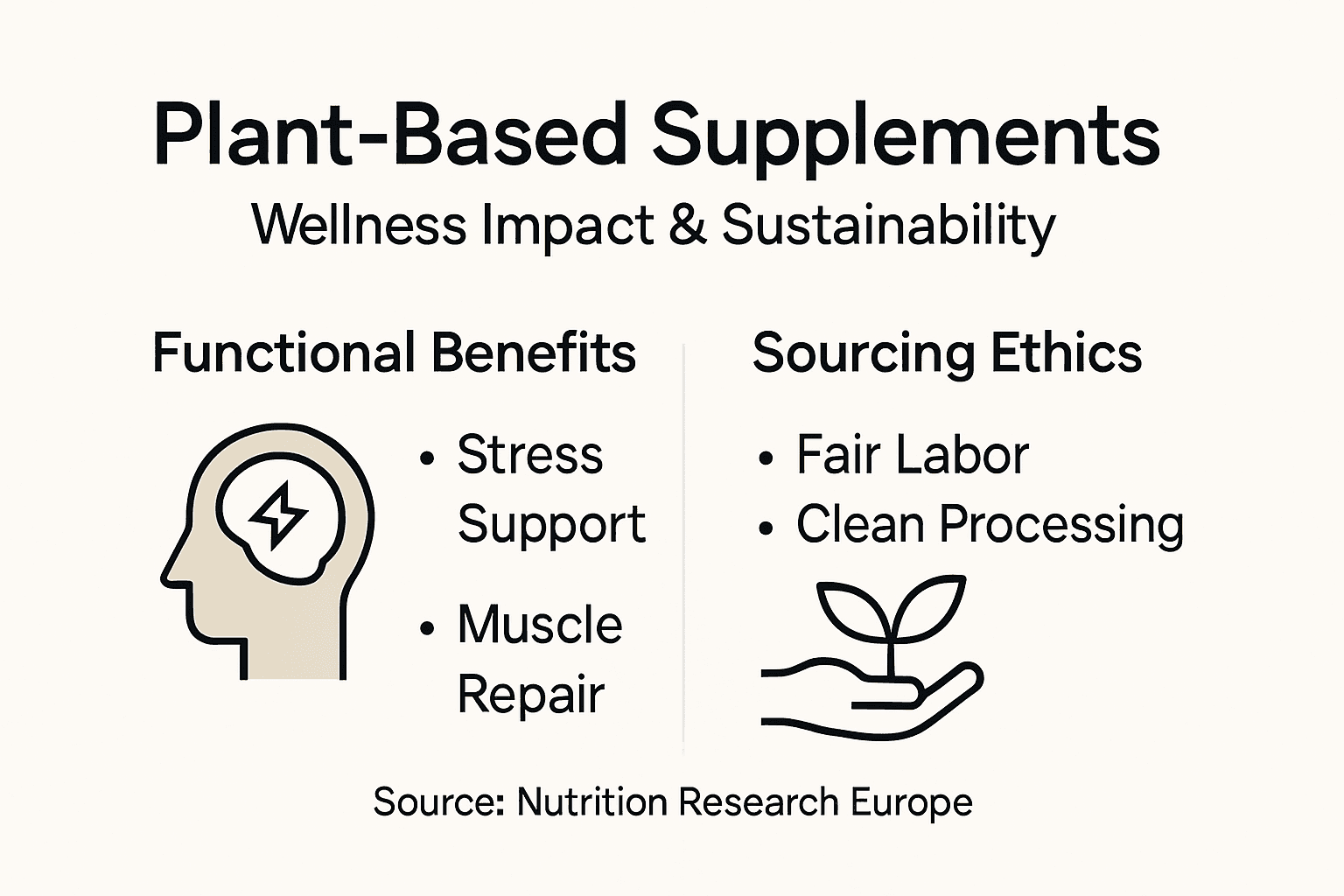
Ethical sourcing integrates fair labor practices, sustainable agriculture, and supply chain transparency. This means knowing exactly where your ashwagandha grows, whether workers are paid fairly, and if forests are protected. Real companies can trace their ingredients back to specific farms.
Purity isn’t optional—it’s non-negotiable. Rigorous testing removes contaminants and adulterants before supplements reach you. Third-party verification confirms what’s actually in the bottle matches the label.
To help you choose more responsibly, here’s a summary of key sustainability and purity markers to seek in supplements:
| Attribute | Why It Matters | How To Verify |
|---|---|---|
| Ingredient origin | Transparency, traceability | Supplier disclosures |
| Third-party testing | Confirms purity, safety | Published lab results |
| Fair labor practices | Social and ethical responsibility | Fair trade certification |
| Eco-friendly processing | Reduces environmental harm | Environmental certifications |
Sustainability considerations include:
- Land use reduction through efficient farming methods
- Water conservation during ingredient cultivation and processing
- Greenhouse gas reduction across the entire supply chain
- Renewable resources prioritizing regenerative plant sources
- Eco-friendly processing technologies minimizing environmental impact
What To Look For When Choosing
Renewable plant protein sources and eco-friendly processing enhance sustainability. Transparency is your best guide. Legitimate companies publish their sourcing information and testing certifications.
Check for certifications indicating genuine commitment. Fair trade labels confirm worker compensation. Organic certifications ensure pesticide-free cultivation. Third-party testing seals guarantee purity.
Ask yourself three questions before purchasing:
- Can the company trace ingredients to specific origins?
- Do they publish third-party purity test results?
- Are their labor and environmental practices documented?
If you can’t find clear answers, that’s a red flag.
Supplements that hide their sourcing or refuse transparency aren’t worth your money or your values.
Pro tip: Request or download the Certificate of Analysis from your supplement provider before purchasing—this third-party test proves the product is contaminant-free and contains exactly what the label claims.
Risks, Allergies, And Limitations Compared To Alternatives
Plant-based supplements aren’t risk-free, and pretending they are would be irresponsible. Understanding potential downsides helps you make informed choices aligned with your health reality.
Allergenicity from legume proteins, antinutrients, and microbial contamination represent real risks. If you have nut or legume sensitivities, certain supplements pose genuine danger. Processing doesn’t always eliminate allergens sufficiently. Nutritional imbalances can emerge if supplements become your primary nutrient source instead of supporting a balanced diet.
Specific allergen risks include:
- Legume proteins (peas, lentils, chickpeas) trigger severe reactions in sensitive individuals
- Tree nuts (almonds, cashews) contaminate some supplement batches
- Seeds (sesame, sunflower) present cross-contamination concerns
- Microbial pathogens from poor processing or storage
- Antinutrients that reduce mineral absorption when consumed in excess
Real Limitations You Should Know
Plant protein sources are known allergens, and processing may not reduce allergenicity sufficiently. Multiple supplements containing similar ingredients increase cumulative allergen exposure. This summation effect matters more than single-ingredient risk.
Exclusive reliance on plant-based supplements creates nutrient deficiencies. B12, iron, and zinc bioavailability remains lower from plant sources even with supplements. You need whole foods as your foundation.
Compared to whole foods, supplements offer convenience but lack fiber, phytonutrients, and the complex nutrition packages nature provides. Whole foods like leafy greens, legumes, and nuts deliver benefits supplements isolate.
When supplements make sense:
- Addressing documented deficiencies (B12 for vegans)
- Supporting specific health conditions with clinical evidence
- Complementing solid dietary habits
- Working with healthcare providers familiar with your allergies
Supplements fill gaps—they don’t build foundations. Without solid nutrition and healthy habits, no supplement delivers lasting results.
Pro tip: Before starting any supplement, especially if you have allergies, request the full ingredient list and processing information directly from the manufacturer, then discuss it with a healthcare provider familiar with your medical history.
Discover Effective Plant-Based Support Tailored For You
Struggling to find plant-based supplements that truly fit your sleep, joint, or cognitive wellness needs? This article highlights the importance of choosing targeted ingredients like Ashwagandha for stress relief, Melatonin for natural sleep cycles, or Glucosamine for joint mobility. At VitaminOne, you gain access to a carefully curated selection of premium plant-based vitamins and supplements designed to complement your lifestyle and address these exact challenges.

Experience the difference of ethically sourced, pure supplements crafted for real results. Take control of your well-being today by exploring options like D-vitamin and B12 for energy and bone health, or enhance mental clarity with Lion’s Mane and Chaga. Act now to start supporting your health with confidence knowing you are choosing products grounded in science and sustainability. Visit VitaminOne.dk and empower your journey toward lasting wellness.
Frequently Asked Questions
What are plant-based supplements?
Plant-based supplements are concentrated forms of nutrients derived from medicinal herbs, vitamins, minerals, and botanicals designed to support specific health needs and fill dietary gaps.
How do I choose the right plant-based supplement for my health needs?
Identify your specific health goals, such as improving sleep quality or joint comfort, and select a supplement that addresses those concerns. Start with one supplement at a time to track its effectiveness.
Can plant-based supplements replace a balanced diet?
No, plant-based supplements cannot fully replace a balanced diet. They are intended to complement your nutrition, not substitute whole foods, which are essential for overall health.
Are there any risks associated with taking plant-based supplements?
Yes, potential risks include allergen exposure and nutrient deficiencies if supplements are relied upon exclusively instead of maintaining a balanced diet. Always consult with a healthcare provider before starting any new supplement, especially if you have allergies.
0 kommentarer